AI Automation in FMCG: Transforming Operations, Sales, and Supply Chains
The Fast-Moving Consumer Goods (FMCG) industry is one of the most competitive and operationally complex sectors in the world. With razor-thin margins, high-volume transactions, and constant demand fluctuations, efficiency is not optional, it is survival.
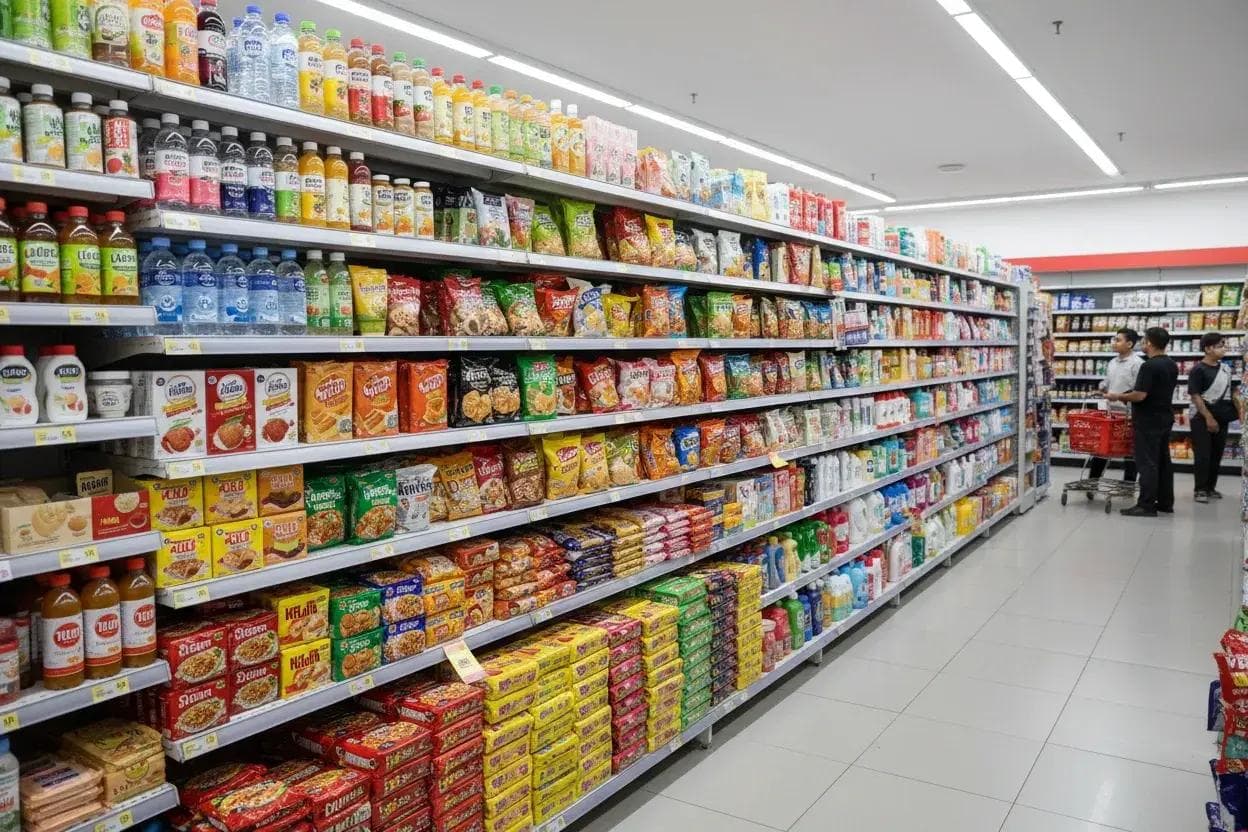
Today, AI automation is redefining how FMCG companies operate, from supply chain optimization to sales forecasting and financial reconciliation.
In this article, we explore how AI is transforming FMCG operations and why organizations that adopt early will dominate their markets.
What is AI Automation in FMCG?
AI automation refers to the use of artificial intelligence to handle repetitive, data-heavy, and decision-based processes with minimal human intervention.
In FMCG, this includes:
- Automating sales and inventory forecasting
- Processing invoices and financial reconciliation
- Optimizing distribution and logistics
- Generating real-time business insights
- Enhancing customer and retailer engagement
Instead of relying on manual Excel sheets and disconnected systems, organizations can now run intelligent, self-learning operations.
Key Challenges in FMCG Operations
Before diving into solutions, it’s important to understand the real problems most FMCG companies face:
1. Manual and Fragmented Data
Many FMCG companies still rely on:
- Excel spreadsheets
- Manual reporting
- Disconnected systems
This leads to:
- Errors
- Delayed decision-making
- Poor visibility across operations
2. Inefficient Sales and Distribution Tracking
Sales teams operate across regions, distributors, and agents, making it difficult to:
- Track performance in real time
- Monitor product movement
- Identify top-performing SKUs
3. Financial Reconciliation Bottlenecks
Matching:
- Invoices
- Payments
- Customer remittances
…is often manual and time-consuming.
4. Demand Forecasting Challenges
Without accurate forecasting:
- Stockouts occur
- Overstocking increases costs
- Revenue opportunities are lost
How AI Automation Solves These Problems
AI doesn’t just digitize processes, it makes them intelligent and predictive.
1. Intelligent Sales Forecasting
AI models analyze:
- Historical sales data
- Seasonal trends
- Market behavior
To predict:
- Future demand
- Optimal stock levels
- Regional performance
Result: Better planning and reduced losses.
2. Automated Financial Reconciliation
AI can automatically:
- Match invoices with payments
- Identify discrepancies
- Generate reconciliation reports
Result: Finance teams save hundreds of hours and reduce errors.
3. Smart Inventory & Supply Chain Optimization
AI systems monitor:
- Warehouse stock
- Distributor movement
- Retail demand
And automatically:
- Trigger restocking
- Optimize delivery routes
- Reduce wastage
4. Real-Time Sales Analytics
AI dashboards provide:
- Live sales performance
- SKU-level insights
- Agent and distributor tracking
Result: Faster and smarter business decisions.
5. Data Cleaning and Structuring (From Excel to Intelligence)
One of the biggest hidden problems in FMCG is messy data.
AI tools can:
- Clean unstructured Excel data
- Standardize formats
- Convert raw data into usable insights
This is especially powerful for organizations transitioning from manual systems.
Real-World Use Case: AI Automation in FMCG Finance & Sales
A typical FMCG company dealing with:
- Multiple distributors
- Hundreds of SKUs
- Daily transaction volumes
Can implement an AI system that:
- Automatically ingests sales and financial data
- Cleans and structures the data
- Matches payments to invoices
- Generates real-time dashboards
- Predicts future sales trends
Outcome:
- Reduced manual work by over 70%
- Improved accuracy in reporting
- Faster decision-making
Benefits of AI Automation in FMCG
Organizations that adopt AI automation experience:
- Operational Efficiency - Reduced manual workload
- Cost Reduction - Fewer errors and optimized resources
- Improved Forecasting - Better demand planning
- Faster Decision-Making - Real-time insights
- Scalability - Systems grow with the business
Why FMCG Companies Must Act Now
The FMCG landscape is changing rapidly.
Companies that continue relying on manual systems will struggle with:
- Inefficiency
- Slow growth
- Competitive pressure
Meanwhile, AI-driven organizations are:
- Scaling faster
- Operating smarter
- Increasing profitability
AI is no longer a future investment, it is a current competitive advantage.
Getting Started with AI Automation
For FMCG companies looking to adopt AI, the journey typically involves:
- Process Discovery
Identifying repetitive and high-impact processes - Data Assessment
Understanding existing data sources (Excel, ERP, etc.) - System Design
Building AI-driven workflows tailored to operations - Integration
Connecting with existing systems - Deployment & Optimization
Continuous improvement using real data
Conclusion
AI automation is transforming the FMCG industry by turning complex, manual operations into intelligent, efficient systems.
From sales forecasting to financial reconciliation, organizations that embrace AI will not only improve efficiency but unlock new levels of growth and scalability.
Looking for an AI Automation Partner?
At Glitex Solutions Limited, we help FMCG organizations streamline operations through intelligent automation.
We design and build AI-powered systems that:
- Automate repetitive processes
- Clean and structure your data
- Deliver real-time insights
- Support scalable growth
If you're looking to transform your FMCG operations with AI, we’re ready to partner with you.